


Contributing to the economic prosperity of Ontario
We are one of the largest insurance organizations in North America, covering more than five million people and 300,000 workplaces across Ontario. We work to strengthen our communities and contribute to the economic prosperity of our province by easing the burden caused by workplace injuries and illnesses.
- We ease the financial stress on injured or ill people and their families by replacing lost wages and covering medical expenses.
- We keep jobs in Ontario, supporting a stable workforce.
- We minimize the impact of workplace injuries for employers by offering solutions that keep people productive and engaged during their recovery.
- We help ensure that injured or ill people and their families can continue to participate in society as much as possible, contributing to the province’s economic activity.
Reducing the duration of claims has a positive impact on our health care, social, and legal systems, leading to cost savings. Investing in health and safety helps businesses stay productive with less absenteeism, lower onboarding costs, and reduced turnover.
Amidst ongoing economic uncertainty in 2025, we provided approximately $4 billion in surplus funds back to eligible, safe Ontario businesses. These rebates recognized the important role businesses play in funding our no-fault work-related injury and illness insurance system, while continuing to protect our ability to help people who have experienced a work-related injury or illness with a safe, timely and lasting recovery and return to work today and into the future.
Additionally, over 99 per cent of our recent procurement spending has been with Ontario businesses, further demonstrating our ongoing commitment to supporting the local economy and fostering strong relationships with suppliers within the province.
How we’re making real economic impact

Rate reductions are making a positive impact
We lowered the average premium rate for Ontario businesses in 2026 to $1.23 per $100 of insurable payroll, the lowest it has been in more than 50 years.
The 2026 decrease means we’ve cut the average premium rate by more than 50 per cent over the last decade, resulting in cumulative savings for businesses of approximately $21.5 billion since 2016.
This reduction in rates has resulted in significant savings for Ontario businesses and a positive impact for our economy.
Savings from WSIB rate reductions have resulted in increased business investment in Ontario
$2.3 billion
increase in business investment (2016–2024)
$3.1 billion
increase in consumer spending (2016–2024)
Increase in investment and consumer spending has had a positive impact on Ontario’s gross domestic product and level of employment
$5 billion
growth in Ontario’s economy (2016–2024)
$1,010 million
growth in real GDP (2024)
8,600
jobs supported (2024)
Support for businesses (2022-2023)
In 2025, we continued to find new ways to help businesses and make it simpler than ever to work with us.
- We launched a new business registration service, meaning most businesses now receive their WSIB account number and access to our online services in seconds, instead of days.
- We introduced a newly designed monthly account statement for most businesses, making it easier to read and understand.
- Newly registered smaller businesses now have access to free and confidential health and safety talks to learn about their responsibilities and available resources.
- Businesses now benefit from an enhanced Health and Safety Excellence program. Updates included:
- a simplified rebate structure
- new psychological health and safety topics
- a suggested pathway to help small businesses and businesses new to health and safety navigate the program
- We provided all WSIB-registered businesses free access to the Canadian Centre for Occupational Health and Safety’s Business Safety Portal to help them make their workplaces safer – a valuable benefit and a savings of up to $1,700 a year.
Sustainable investments
IMCO’s sustainable investing approach supports the WSIB’s long-term financial objectives by strengthening risk management, enhancing investment decision-making, and identifying opportunities for enduring value creation. Through their expertise and active stewardship, they work with portfolio companies to embed strong sustainability practices that support resilient performance. IMCO also extends its impact through strategic partnerships, coalitions, and policy engagement, ensuring our investments reflect responsible governance and a forward-looking approach to sustainability.
For example, in 2025, sustainability highlights included:
- Climate action and environmental impact: Refreshed Climate Action Plan, expanded climate solution investment ambition, and reaffirmed emissions reduction and net-zero targets.
- Supporting safer workplaces: Reviewed and strengthened health and safety practices following an incident at a portfolio company.
- Strong governance and accountability: Exercised active ownership through 14,649 proxy votes focused on strong, independent governance.
- Promoting fair pay and employee ownership: Advanced broad-based employee ownership programs across portfolio companies.
- Global recognition: Ranked as a top-10 public pension fund globally for governance, sustainability, and resilience.

Supporting return to work
The WSIB is here to help. Our return-to-work program helps injured or ill people return to work as soon as they are able, reducing the duration of wage-loss replacement benefits and minimizing the economic impact of workplace injuries in the long-term.
78%
of people are issued payment within 15 days
96%
of lost-time claim decisions made within 10 business days
87%
of injured or ill people returned to work within three months
Promoting health and safety
Health and Safety Excellence program
Our Health and Safety Excellence program connects businesses with WSIB-approved providers to help improve their workplace health and safety practices, while earning rebates on their WSIB premiums.
More than 1.3 million people
in Ontario are safer on the job because they work for businesses that have participated in the program.
$26.9 million in rebates
were provided to businesses in 2025 and $100.1 million has been rebated since the program began in 2019.
5,040 businesses enrolled
in the program by the end of 2025.
Businesses receive $1,000
once they establish their health and safety action plan.
86 per cent of participating businesses are satisfied
with the program and consistently rate the value of WSIB services highly.
Health and safety partnerships
We’ve embarked on innovative, results-driven partnerships with leading health and safety organizations to enhance workplace safety across Ontario. So far, we’ve provided $14.1 million across seven partnerships to support efforts to deliver better and more accessible health and safety resources, training, and research across diverse industries.
Our efforts will help improve health and safety outcomes for the people of Ontario.
Supporting Ontario's Prevention Works Strategy
Prevention Works is Ontario’s ambitious five-year health and safety strategy, providing businesses with help in training and prevention targeting the highest risk areas.
We commit a portion of the revenue generated by business premiums to support Ontario's efforts in health and safety prevention through the following:
- Ontario Occupational Health and Safety Act
- Health and Safety Associations
- Office of the Worker Adviser
- Office of the Employer Adviser
- Workplace Safety and Insurance Appeals Tribunal (WSIAT)
Additional health and safety support

Business safety portal
WSIB-registered businesses have free access to the Canadian Centre for Occupational Health and Safety’s Business Safety Portal. They can sign up and access the portal through their WSIB online services account. The portal provides a wide range of safety resources and practical tools designed to help businesses improve workplace health and safety.
First aid training
All businesses covered by the Workplace Safety and Insurance Act are required to have first aid equipment, facilities and trained personnel in all workplaces. Businesses can access our list of approved providers for emergency and standard first aid training agencies.
In 2025, we began work to modernize Ontario’s First Aid Program to strengthen workplace safety and improve access to high quality training across the province.
Health and safety association membership
Businesses registered with the WSIB automatically receive a free membership to the health and safety association that represents their industry. Businesses can use our association finder to help identify their correct association partner. Association membership gives businesses direct access to expert advice, training, and industry-specific resources, which can make a positive impact on their workplace safety culture and help reduce injuries.
Safety Check
Anyone can find out how safe a business is and compare health and safety results of similar businesses using Safety Check. Enhanced business safety record transparency helps our customers and partners make informed decisions about the businesses they work with and for.
Innovating for a safer Ontario
WSIB Research and Grants Program
Research and innovation play a big role in supporting a safer Ontario.
We fund practical solutions for better outcomes in workplace health and safety.
Since its inception in 2016, the program has:
Awarded more than
$16 million for research
Funded
51 annual competition grants
7 systematic reviews
1 case study
Funded
40 investigators
across
36 institutions
Spotlight on innovation

Applying AI in OHS
Dr. Arif Jetha
Institute for Work & Health
Research snapshot
Dr. Jetha explored artificial intelligence (AI) in occupational health and safety (OHS) to prevent workplace injury and illness. The project produced a review of AI applications in OHS, identifying areas where AI has potential, such as: predictive analytics for injury risk, hazard detection, fatigue monitoring, mental health support, and automation of high-risk tasks. Findings also highlighted barriers to AI adoption, such as: cost, data quality, trust, lack of regulation, and ethical risks.

Tele-mentoring to build capacity
Dr. Andrea Furlan
Institute for Work & Health
Research snapshot
Research snapshot: Extended from a 2020 pilot study, Dr. Furlan continued Project ECHO, a tele-mentoring program building capacity among primary healthcare providers to manage work-related injuries and illnesses. The project tested a comprehensive, user-friendly tool improving how clinicians collect occupational histories from patients. The program demonstrated strong engagement, knowledge gain, and high satisfaction among participants, with positive implications for WSIB policy and return-to-work outcomes.

Nurse injury prevention
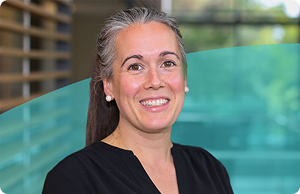
Dr. Catherine Goldie and Dr. Alyson Mahar
Queen’s University
Research snapshot
Drs. Goldie and Mahar will explore why nurses face high rates of workplace injuries which lead to physical and mental health challenges. These injuries contribute to burnout, absenteeism, and workforce shortages, impacting well-being and patient care quality. The study will assess mental health service use among nurses who have experienced a job-related physical injury in Ontario, enabling ongoing surveillance of mental health service utilization following work-related injuries to enhance support and interventions for injured nurses.

Preventing workplace fatalities
Dr. Peter Smith
Institute for Work & Health
Research snapshot
Dr. Smith will address information gaps to provide a better understanding of workplace and environmental factors associated with traumatic fatalities and critical incidents, to be used for targeted prevention activities and better guidance to workplaces. Using data linkage between WSIB claims, employer/employee taxation records and environmental data, new insights gained can help predict when fatalities and critical incidents might occur and where.
In 2025, the WSIB significantly expanded its research and grants funding activities outside of the Research and Grants program to include several large, cutting-edge research projects designed to position Ontario as a global leader in health and safety research and innovation.